
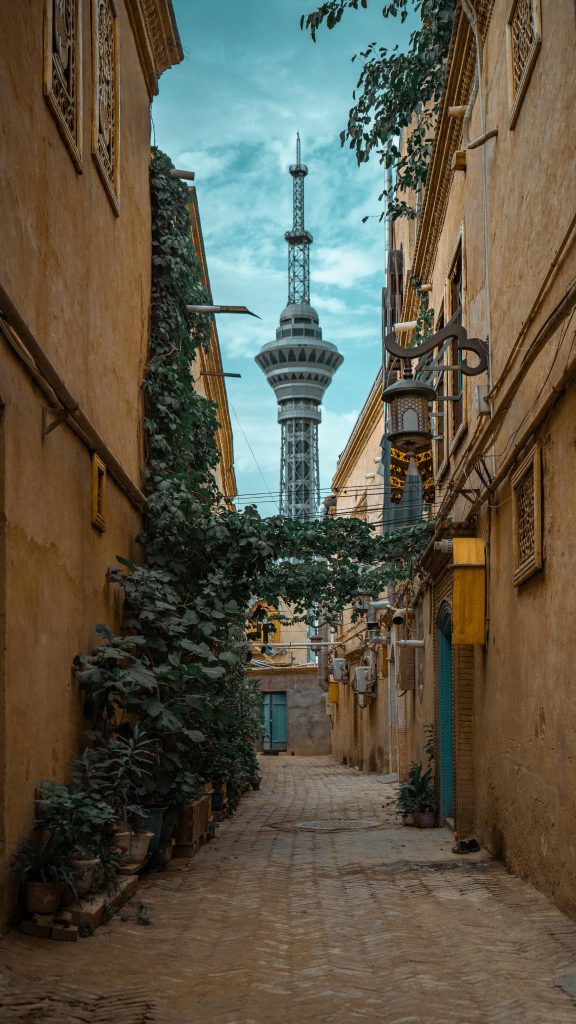
Located on the Silk Road, the province of Xinjiang in China has for millennia been a meeting point of civilizations and religions. Caravans of camels crossed the mountains and deserts, bringing merchandise and ideas in and out of China into Central Asia and the Middle East.
It has also been a hotly contested area, ruled by a succession of empires and warlords, and no stranger to war, genocide, and mass displacements. It is now firmly politically integrated into China. Though Xinjiang used to have a large Uyghur majority, migration policies by China have changed that. There are now almost as many Han Chinese as Uyghurs, and a host of other minorities, like the Hui people. More than half of Xinjiang is Muslim, which is the main religion of both the Uyghurs and the Hui. Christians are only a tiny minority, and most of them are Han Chinese.
Since the beginning of the Back to Jerusalem movement, Xinjiang has been a focal point for mission. Early Back to Jerusalem missionaries, planning to travel the Silk Road all the way back to Jerusalem, arrived there in the 1940s. They came on foot or on horseback, travelling many months from their home provinces in Eastern China, preaching along the way.
As they came to Xinjiang, the communist army took over China and they were stopped in their tracks. With their faces set towards Jerusalem, they felt like they had failed in their mission, but later they came to accept that it was God’s will for them to stay in Xinjiang and preach the gospel there.
One brother from Xinjiang recently shared about the tumultuous history of the house churches these missionaries planted in Xinjiang. In the early 1960s there were ethnic conflicts, and bands of Muslims would attack the Han Chinese. These conflicts were very deadly and resulted in famine. The Christians, Han Chinse themselves, were in continual danger, and ran out of food. Multiple times they were miraculously saved when raiders came looking for them, but could not find them. Once, after crying out to the Lord for food, a group of Muslim bandits brought them the cattle Han Chinese farmers had left behind when they fled. The Muslims considered the animals unclean and forced the Christians to kill and eat the animals, which saved them from starvation.
The cultural revolution from 1966-1976 brought other dangers. Christians were treated as criminals. They were accused of being lazy and unproductive. They were ridiculed and forced to wear dunce hats. Their churches were destroyed and many of the Christians were banished to very remote areas of the province, to live in harsh conditions, isolated from each other.
In the 1980s, the Christians were able to gather again, and their vision was strengthened. In the 1990s, revival broke out and once again Christians started to dream about going back to Jerusalem. The new generation of believers also caught the vision in the 2000s. They would work and plant churches in Xinjiang for several years and then be sent out over the border. Our brother shared how house church believers from Xinjiang are now working all across Central Asia, the Middle East and in several African nations as well.
The work in Xinjiang itself is challenging. It is perhaps the most controlled area in China, and meetings of more than three people are very risky. Christian leaders are under strict surveillance. Many suffer from stress. Nevertheless, the house churches are determined to continue investing in the next generation. As a result of campus ministry, many students have become believers in recent years, and they are being mentored and trained to become evangelists themselves.
As hard as it is to minister in Xinjiang, it is an excellent training ground for work in Central Asia and the Middle East. Christians in Xinjing are exposed to a variety of cultures and religions. They learn how to live as a follower of Jesus in a hostile environment. And through the suffering and hardship, we see the beginnings of Xinjiang once again becoming a gateway, not for silk, but for the gospel to flow out of China into the 10/40 window.
